Florida Geology: Uniquely Beautiful
Our state’s geological history is anything but flat!
Have you ever wondered why Florida has so many lakes, springs and sinkholes? Much of Florida is “karst” terrain: a landscape resting on a water-soluble rock layer full of holes, caves and underground rivers. Rocks, sediments, landforms and water across the state tell a fascinating story.
Springs
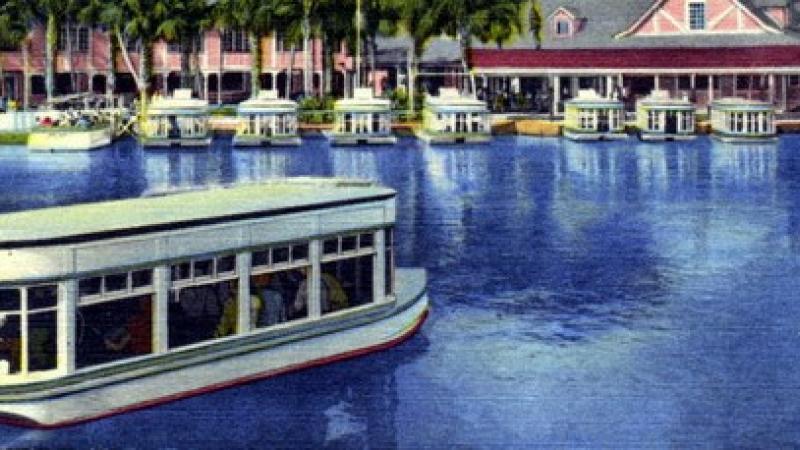
Florida’s springs are karst features formed when limestone dissolves. As their cool water flows to the earth’s surface, springs offer a window into the Floridan aquifer, which provides more than 90% of our drinking water. Perhaps the most famous spring is at Edward Ball Wakulla Springs State Park, but there are many springs parks, each with their own unique geology.
Sinkholes
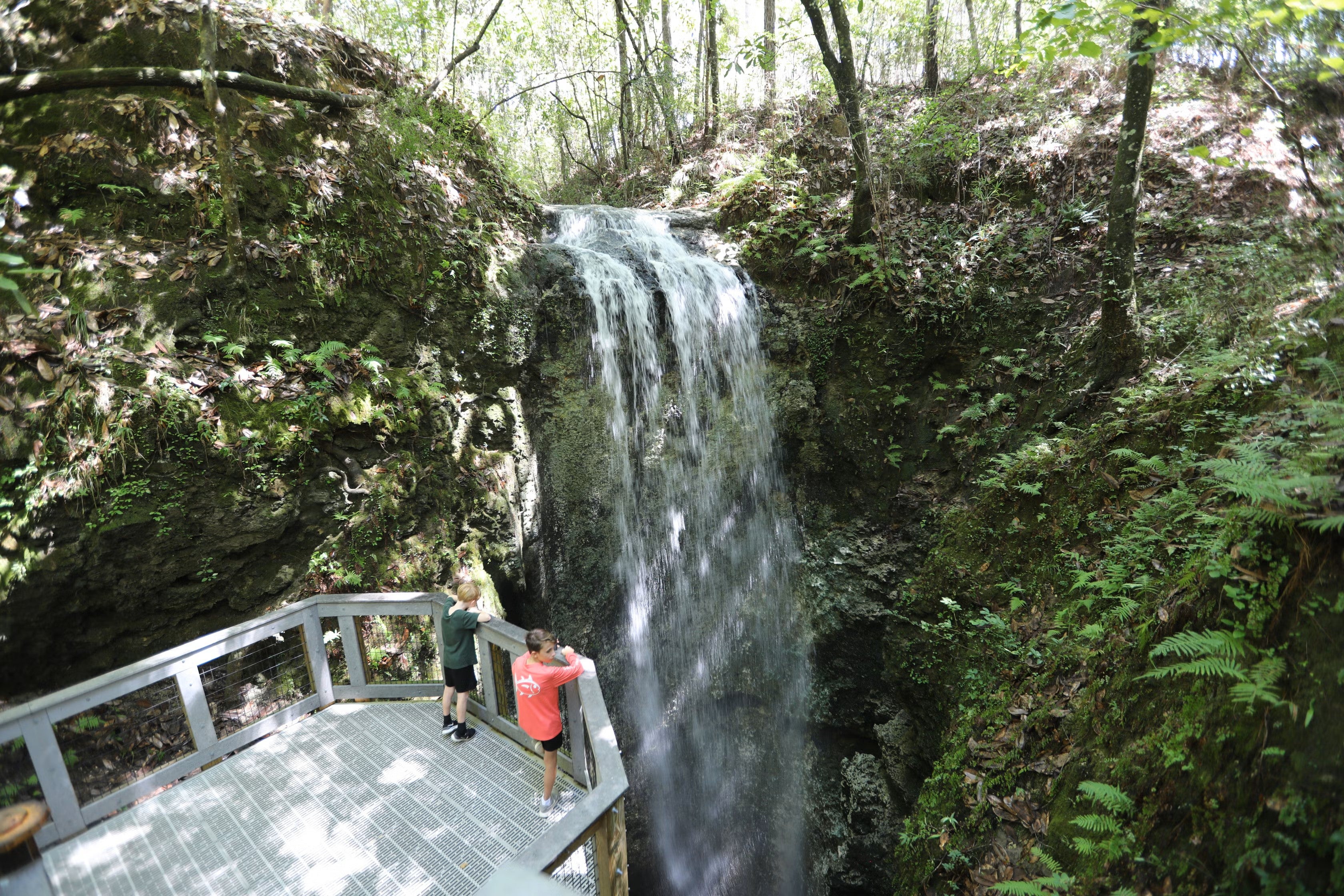
Sinkholes are created when underground rock dissolves and collapses. Some of Florida’s most stunning sinkholes are protected by state parks. Falling Waters State Park features Florida’s tallest waterfall at over 70 feet. At Devil's Millhopper Geological State Park, a lush subtropical forest has grown within a 120-foot-deep sinkhole. Paynes Prairie Preserve State Park, a vast wetland prairie, has karst terrain on its northern edge and a sinkhole that acts like a "drain" when water levels are high. With that metaphor in mind, consider using Florida Friendly Landscaping to help keep springs clean.
Steephead Ravines
One of Florida’s lesser-known geological features seems out of place in the flat state. Visiting a steephead ravine gives the impression that you’re in a mountainous area. These ravines form when spring water seeps from the ground, carving a deep channel. At Ravine Gardens State Park, a paved road and unpaved trail network provide awesome views of clear spring streams and two ravines, each over 100 feet deep.
On the trails at Mike Roess Gold Head Branch State Park and Torreya State Park, you can explore deep ravines that shelter unique habitats from the outside world.
Geological History and Human History
Some coastal state parks preserve examples of the crossover between geological history and human history. At Anastasia State Park Spanish settlers quarried coquina, a stone made of naturally cemented fossil shell fragments, and used it to construct the massive Castillo de San Marcos.
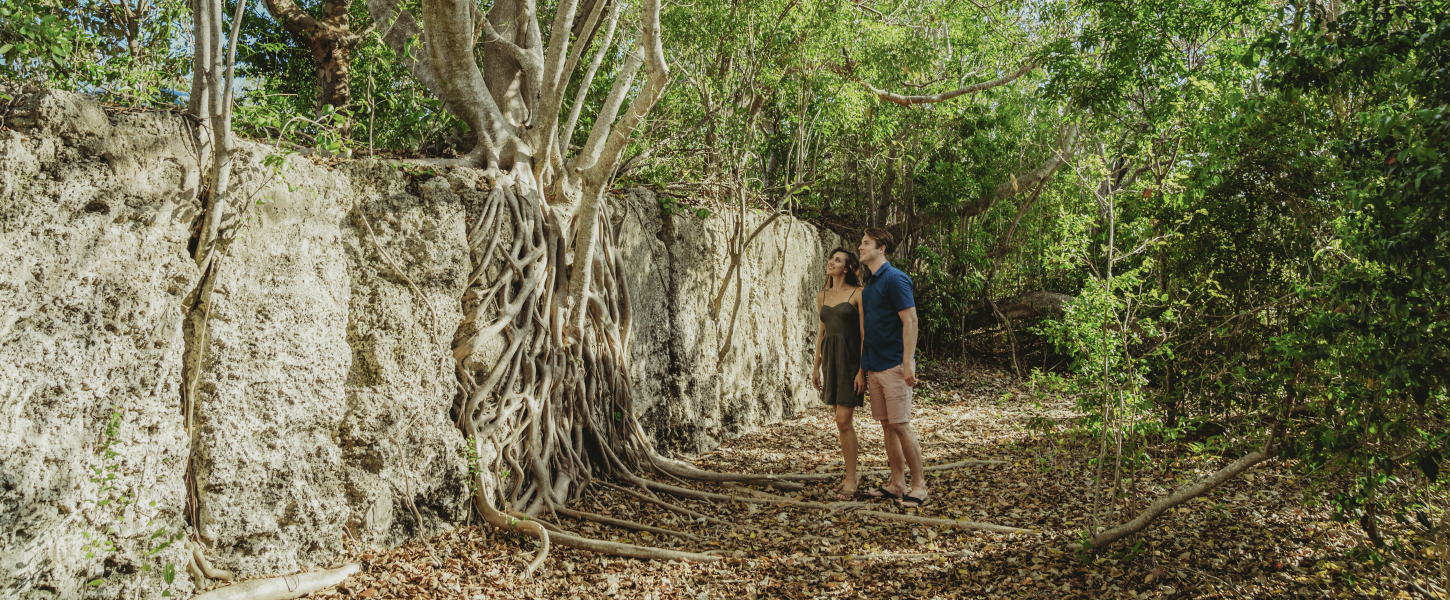
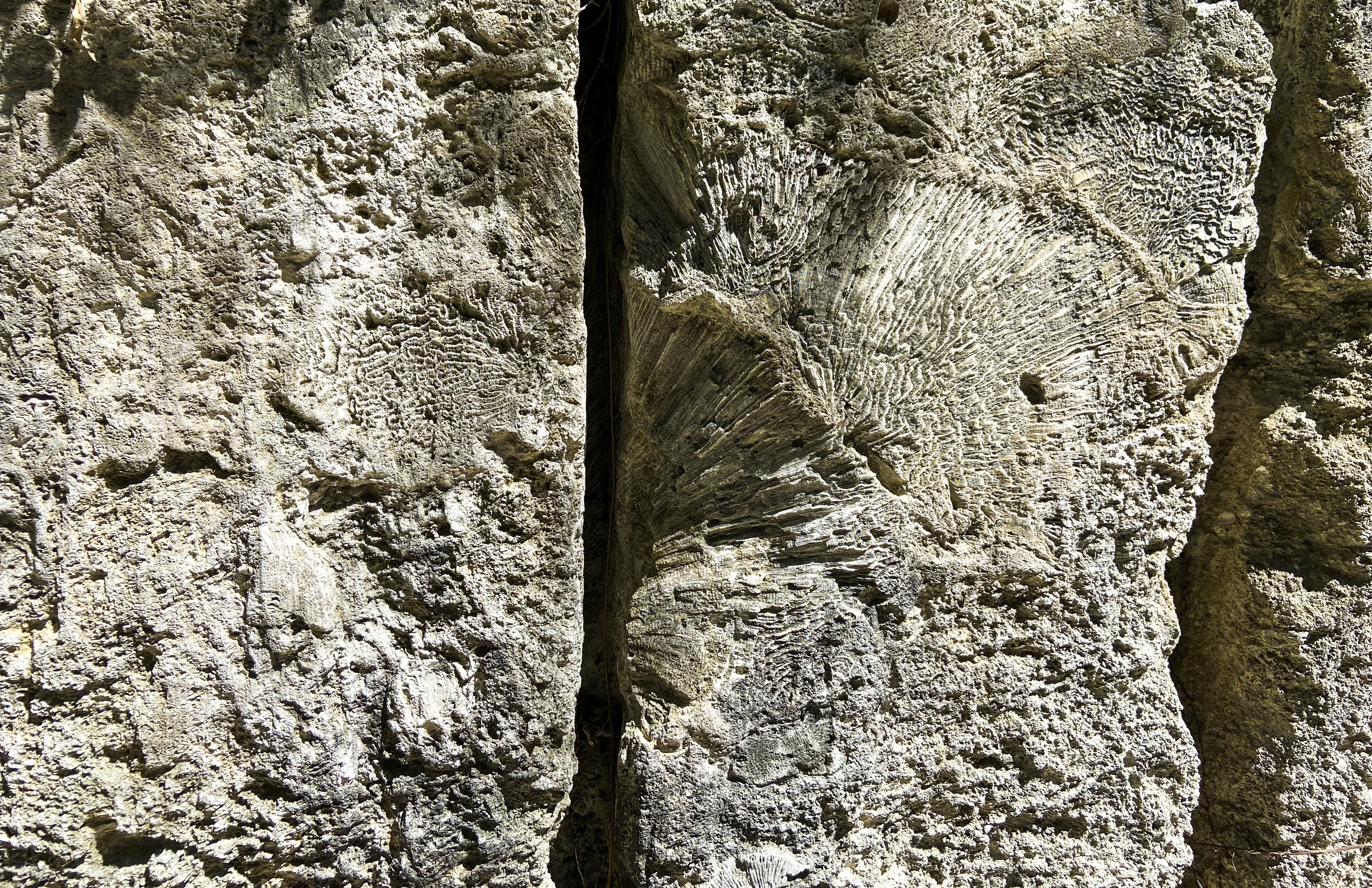
At Windley Key Fossil Reef Geological State Park you can stand inside a fossilized coral reef, a segment of Florida’s Coral Reef frozen in time. This exposed formation of the Key Largo limestone was used to build the Overseas Railroad in the early 1900’s.
Learn more about the Florida Geological Survey’s designated State Geological Sites or geology in Florida State Parks